
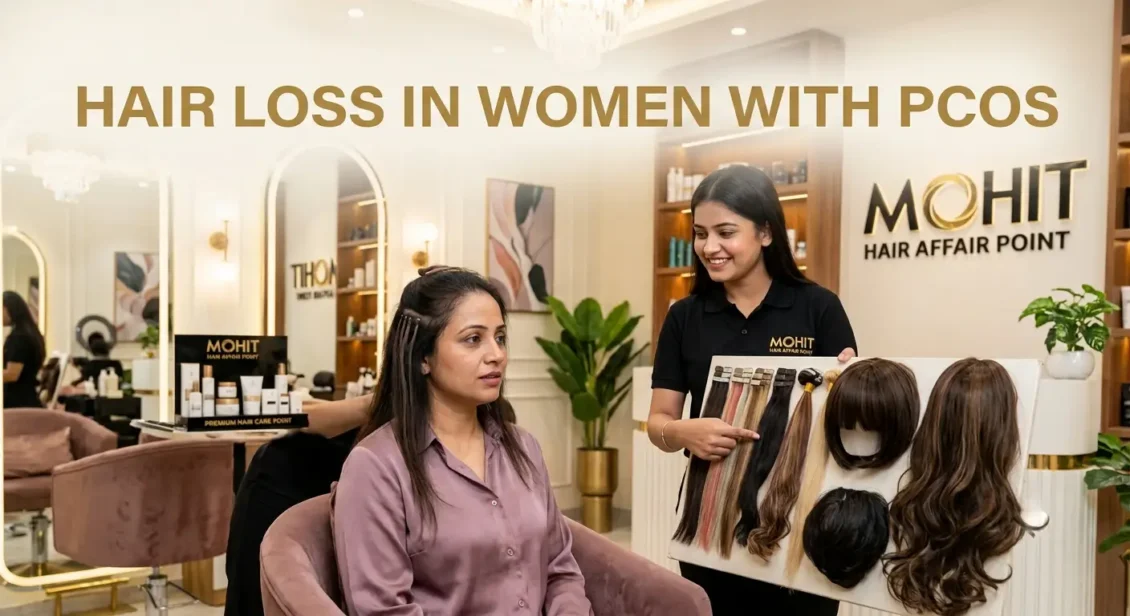
Hair loss in women with PCOS is a common problem caused by hormonal imbalance. While it can be stressful, the condition can often be managed with early treatment, healthy lifestyle changes, and supportive hair restoration solutions. Understanding the cause is the first step toward protecting your hair and improving your confidence.
Many women think losing more hair than usual is just a temporary problem. However, if you have Polycystic Ovary Syndrome (PCOS), your hair thinning may be linked to changes in your hormones.
You may notice your hair becoming thinner around the crown, your part line looking wider, or your ponytail feeling less full than before. These changes usually happen slowly, making them easy to ignore at first.
The good news is that hair loss in women with PCOS can often be managed. The earlier you understand the cause and begin the right treatment, the better your chances of slowing hair thinning and encouraging healthier hair growth.
In this guide, you’ll learn why PCOS affects your hair, the common signs to watch for, the best PCOS hair thinning treatment options, and non-surgical solutions that can help restore your confidence.
Table of Contents
What Is PCOS?
Polycystic Ovary Syndrome, commonly called PCOS, is one of the most common hormonal conditions affecting women during their reproductive years.
Women with PCOS often have higher levels of androgens, sometimes called male hormones. Although every woman naturally has small amounts of these hormones, higher levels can affect different parts of the body.
PCOS may cause:
- Irregular periods
- Acne
- Weight gain
- Difficulty getting pregnant
- Extra facial or body hair
- Hair thinning on the scalp
Not every woman experiences the same symptoms. Some mainly struggle with irregular periods, while others notice changes in their skin or hair first.
One of the most emotional symptoms is hair loss due to PCOS, as it can affect confidence and self-esteem.
Why Does Hair Loss in Women with PCOS Happen?
Many women ask why PCOS affects the hair on their head while causing extra hair growth on the face.
The answer lies in hormones.
Women with PCOS usually have higher androgen levels. These hormones can shrink hair follicles on the scalp over time. This process is called follicle miniaturization.
When hair follicles become smaller:
- Hair grows thinner.
- Hair grows more slowly.
- New hair becomes weaker.
- Hair falls out more easily.
Over time, some follicles may stop producing healthy hair altogether.
This condition is often known as female pattern hair loss or androgenetic alopecia.
Several other factors can also make hair thinning worse.
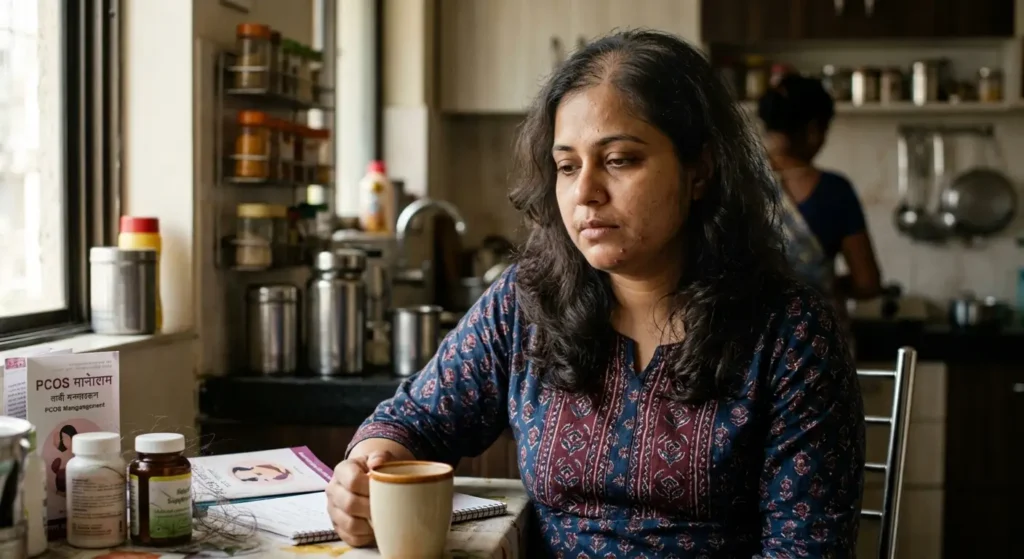
Insulin Resistance
Many women with PCOS also have insulin resistance.
When your body produces extra insulin, it may also produce more androgens. This creates a cycle that can increase hair thinning.
Inflammation
Long-term inflammation may reduce the health of your hair follicles and make hair weaker.
Stress
Living with PCOS can be stressful.
Stress itself can push more hairs into the shedding phase, making existing hair loss appear even worse.
Genetics
Family history also plays an important role.
If close family members have experienced female pattern hair loss, your risk may be higher.
Remember, hair loss in women with PCOS is not caused by poor hair care. It is mainly a hormonal condition that needs proper management.
Common Signs of Hair Loss in Women with PCOS
PCOS-related hair loss usually develops slowly rather than suddenly.
Some common signs include:
- Hair becoming thinner at the crown
- A wider part line
- Reduced hair volume
- More hair falling while washing or brushing
- Scalp becoming easier to see
- Hair looking finer than before
Unlike some other hair loss conditions, PCOS rarely causes completely bald patches.
Instead, most women notice gradual thinning over several months or years.
You may also experience other PCOS symptoms such as:
- Irregular menstrual cycles
- Acne
- Weight gain
- Increased facial hair
- Oily skin
If hair thinning occurs together with these symptoms, it is a good idea to speak with your doctor.
Early diagnosis often leads to better treatment results.
Can Hair Grow Back?
One of the most common questions women ask is whether their hair will return.
The answer depends on several factors.
If the hormonal imbalance is treated early, many women notice that hair shedding slows down. Some also experience healthier and thicker hair growth over time.
However, if hair follicles remain damaged for many years, full regrowth may become more difficult.
This is why early diagnosis is important.
Following your doctor’s treatment plan, maintaining a balanced diet, managing stress, and choosing appropriate hair care can all improve your chances of healthier hair.
While medical treatment works on the underlying cause, some women also choose cosmetic solutions to restore confidence immediately without waiting months for visible improvement.
Best PCOS Hair Thinning Treatment Options
There is no single treatment that works for every woman. The best PCOS hair thinning treatment depends on your hormone levels, overall health, and how long you’ve been experiencing hair loss.
Most doctors recommend treating the hormonal imbalance first while also supporting healthy hair growth.
1. Get a Proper Medical Diagnosis
If you notice ongoing hair thinning along with symptoms like irregular periods, acne, or weight gain, schedule an appointment with your doctor or an endocrinologist.
Your doctor may recommend:
- Blood tests to check hormone levels
- Insulin resistance testing
- Thyroid function tests
- Vitamin deficiency tests
Finding the exact cause is the first step toward choosing the right PCOS treatment for hair loss.
2. Follow Your Doctor’s Treatment Plan
Depending on your condition, your doctor may recommend treatments that help balance hormone levels.
These may include:
- Hormone-regulating medications
- Anti-androgen medicines
- Topical hair growth treatments
- Treatments for insulin resistance
Never start prescription medicines without medical advice.
3. Eat a Hair-Healthy Diet
Your diet plays an important role in managing PCOS and supporting healthy hair.
Try to include foods that are rich in:
- Protein
- Iron
- Zinc
- Omega-3 fatty acids
- Vitamin D
- Biotin
- Vitamin B12
Healthy food choices may also help improve insulin sensitivity, which can support long-term hair health.
4. Manage Stress
Stress doesn’t cause PCOS, but it can make hair loss due to PCOS worse.
Simple habits that may help include:
- Walking every day
- Yoga
- Meditation
- Deep breathing exercises
- Getting 7–8 hours of sleep
Reducing stress supports both your mental well-being and overall health.
5. Take Care of Your Hair
When your hair is already thinning, gentle care becomes even more important.
Try these tips:
- Avoid tight ponytails
- Limit heat styling
- Use mild shampoos
- Avoid frequent chemical treatments
- Use a wide-tooth comb on wet hair
- Don’t rub your hair harshly with a towel
Small daily habits can help reduce unnecessary breakage.
Can Vitamins Help Hair Growth?
Some women with PCOS also have vitamin or mineral deficiencies that may affect hair growth.
After discussing it with your doctor, supplements may be recommended if you’re deficient.
Common nutrients linked to healthy hair include:
- Iron
- Vitamin D
- Zinc
- Biotin
- Vitamin B12
- Folate
Avoid taking supplements without professional advice, as too much of certain vitamins can also be harmful.
Non-Surgical Hair Solutions for Women with PCOS
Medical treatment focuses on reducing hormonal imbalance, but hair growth often takes several months.
During this time, many women look for safe ways to improve the appearance of their hair.
Non-surgical hair solutions can provide immediate confidence while you continue your treatment plan.
Hair Patch for Women
If thinning is mainly visible around the crown or part line, a hair patch for women can instantly create the appearance of fuller hair.
Modern hair patches are lightweight, breathable, and customized to match your natural hair color and texture.
They blend seamlessly with your existing hair, making them suitable for daily use without surgery.
Hair Toppers
Hair toppers are another popular option for women with mild to moderate hair thinning.
They add volume exactly where it is needed while keeping your natural hairstyle.
Many women choose toppers because they are easy to wear and require minimal maintenance.
Hair Extensions
If your hair is healthy but lacks volume, extensions can create a fuller appearance.
However, they should always be applied professionally because excessive tension may increase hair breakage.
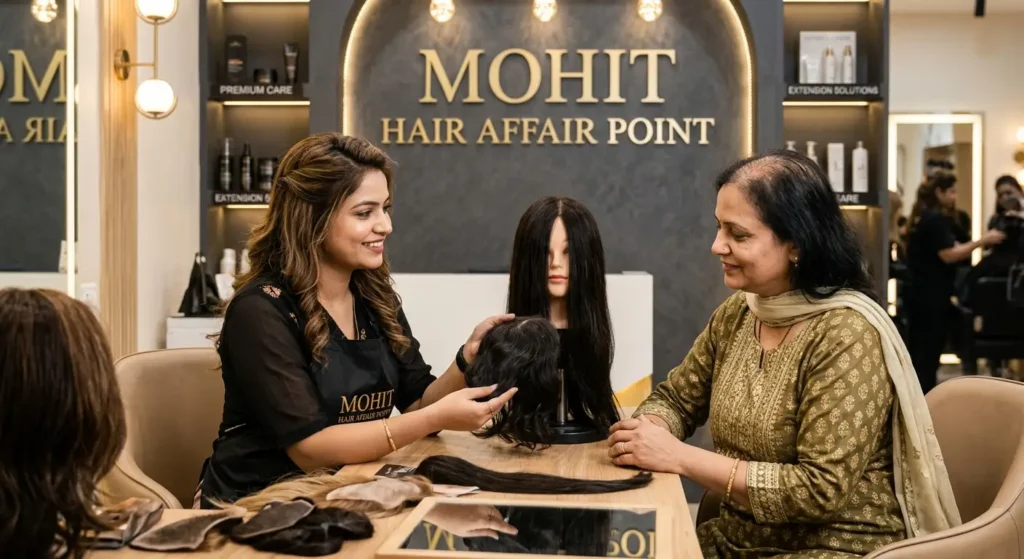
Non-Surgical Hair Replacement Systems
Women experiencing more advanced hair thinning may benefit from non-surgical hair replacement for women.
These customized systems are designed to match your:
- Hair color
- Hair density
- Hair texture
- Hairline
They provide a completely natural appearance without surgery or a long recovery period.
Many women choose this option because it restores confidence immediately while they continue medical treatment for PCOS.
When Should You See a Doctor?
Don’t ignore ongoing hair thinning.
You should consult a healthcare professional if you notice:
- Hair loss lasting longer than three months
- A widening part line
- Rapid hair thinning
- Irregular menstrual cycles
- Acne along with hair loss
- Increased facial hair growth
- Sudden excessive hair shedding
Early treatment offers the best opportunity to protect your hair follicles.
Frequently Asked Questions
Does every woman with PCOS experience hair loss?
No. Every woman experiences PCOS differently. Some develop noticeable hair thinning, while others may never experience significant hair loss.
Can hair grow back after PCOS hair loss?
In many cases, yes. If the hormonal imbalance is treated early, hair shedding often slows down and healthier hair growth may improve over time.
What is the best PCOS hair thinning treatment?
The best PCOS hair thinning treatment depends on the underlying cause. Many women benefit from a combination of medical treatment, healthy lifestyle changes, balanced nutrition, and supportive hair restoration solutions.
What is the best PCOS treatment for hair loss?
There is no single PCOS treatment for hair loss that works for everyone. Treatment usually focuses on balancing hormones while supporting healthy hair growth under medical supervision.
Are non-surgical hair solutions safe?
Yes. Options like hair patch for women and non-surgical hair replacement for women are external cosmetic solutions. They do not interfere with medical treatment and can help improve confidence while addressing hair thinning.
How long does it take to see results?
Hair growth is a gradual process. Many women notice improvements within three to six months after starting the appropriate treatment plan, although individual results vary.
Final Thoughts
Hair loss in women with PCOS can feel frustrating, but it is a manageable condition. The key is to understand that the problem is usually caused by hormonal changes rather than poor hair care.
Getting an early diagnosis, following your doctor’s advice, eating a balanced diet, managing stress, and taking good care of your hair can all make a positive difference over time.
While waiting for medical treatment to improve hair growth, many women regain confidence with solutions like a hair patch for women or a non-surgical hair replacement for women. These options provide a natural-looking appearance without surgery and can help you feel more comfortable in your everyday life.
Remember, every woman’s journey with PCOS is different. With patience, the right treatment, and consistent care, you can take positive steps toward healthier hair and greater confidence.